

You know that moment when you’re mopping commercial space like an office or a warehouse, or any other space, and realize the tile looks fine, but the grout? Yeah… It’s gone from “off-white” to “mystery brown,” and you’re wondering if it’s supposed to be that color. Spoiler alert, it’s not. And no, that store-bought spray you’ve been using isn’t cutting it. This is exactly where the question hits: what do professionals use to clean grout?
Because let’s be honest, professionals don’t show up with a worn-out sponge and a bottle of whatever was on sale at the supermarket. They roll in with gear, commercial cleaning solutions, and methods that make your grout look like it just came out of the showroom.
So, definitely you don’t want to waste time and elbow grease on results that barely qualify as “better,” it’s time to look at what the experts actually use and why it works so much better than anything hiding under your sink.

Why Should You Clean Grout?
Grout isn’t just some filler between tiles. It’s the backbone holding your tile layout together. You ignore it, you destroy the floor’s look.
It’s About More Than Looks
Yeah, clean grout makes your floor look sharp. But it’s deeper than it looks.
Bacteria love hiding in dirty grout lines. Commercial tile floors often stay warm and wet. You know this is like giving mold and mildew a chance to grow. Even small cracks can trap moisture, letting germs multiply quietly. You think it’s just a color change. It’s actually a microbial playground.
That’s not something you want in your fitness center or event venue, especially in commercial areas where tile and grout maintenance is a health inspection must-have.
Health and Hygiene
Grout is porous. It’s like a sponge built into your floor. Every spill, every mop pass, every shoe drag leaves something behind. Oils. Soap scum. Food residue. Different commercial spaces like warehouses hold grease and even microscopic particles.
Safe and effective commercial grout cleaning removes all the dirt and grime before it becomes a serious hygiene problem. This goes beyond simple scrubbing. It kills germs and makes surfaces safe again.
Extending the Lifespan of Grout
Grout breaks down faster than tile. The particles of grit and sand from outdoors? They get trapped on the surface with every step. That’s slow abrasion.
Over time, that abrasion widens pores. That makes stains sink deeper. Weakens the structure. Then you get cracking.
A solid deep grout cleaning of grout clears away stuck-on debris. It keeps the grout solid and smooth, so you don’t face the hassle of changing it every few years
It Protects Your Tile Investment
You didn’t spend thousands on tile to let grout ruin it. Dirty grout transfers grime to tile edges. Moisture trapped in grout can discolor tile surfaces, too.
If you’ve got natural stone? Even more critical, stone is sensitive. It can absorb what’s in the grout, leading to shadow stains that no polish can fix.
Think of grout as your tile’s guard line. Keep it sealed, keep it clean, and you protect grout from future stains, and by extension, protect your floors.
That’s why professional flooring specialists never treat tile and grout separately in maintenance plans.
How Often Should You Clean Grout?
Grout doesn’t stay the same forever. Even if you mop daily. Dirt and liquids settle deep in the pores.
- For busy zones in commercial facilities, you’re looking at a proper grout cleaning process every 2–4 weeks.
- In low-traffic commercial areas, you can push it every 2–3 months.
- Commercial sites like a different medical facility. Daily office cleaning with a mild detergent. Then schedule quarterly professional grout cleaning to keep bacteria and stains out.
Watch for signs. Grout discoloration. Slimy feel when damp. That gritty texture under your fingertips. All are warning flags.
Skipping cleaning for too long, and you’re not just losing looks, you’re cutting the service life of your tile and grout maintenance investment.
The rule is simple. Clean before it looks bad. That’s how professionals keep grout lines sharp and tile surfaces fresh year-round.
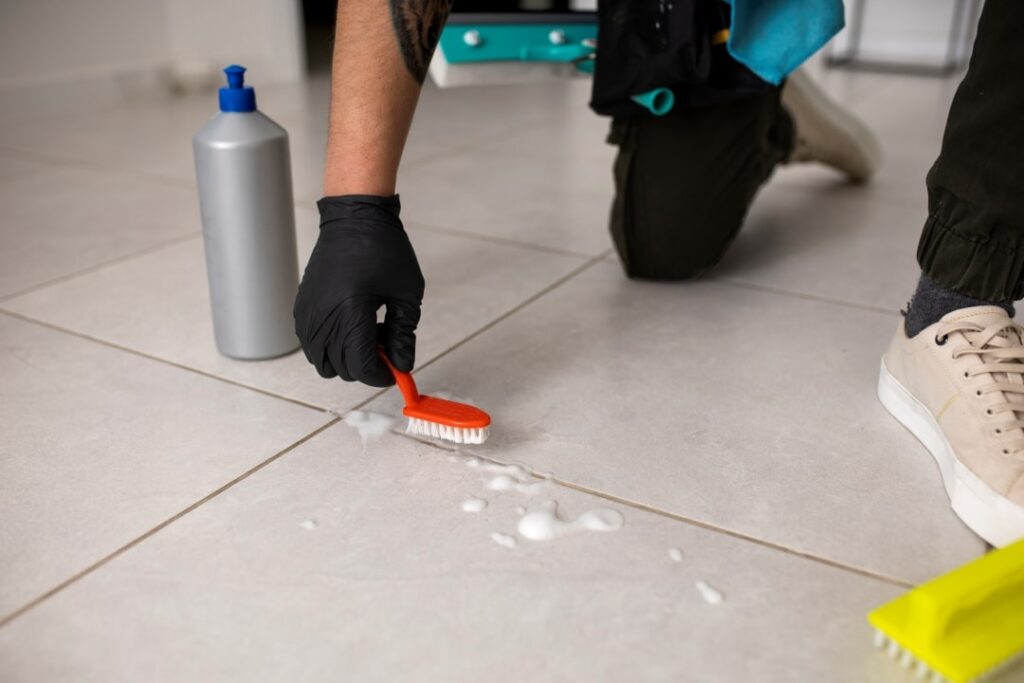
Professional Grout-Cleaning Methods
Sometimes the mop and sponge just don’t cut it. That’s where the pro-level cleaning process steps in. These aren’t your “quick wipe” tricks. These are the heavy hitters in the grout cleaning process.
Oxygen Bleach Powder
Professionals pick oxygen bleach over chlorine for a reason. Chlorine can etch or fade tile. Oxygen bleach penetrates grout pores, lifts stains, and kills mold without harsh fumes, as bleach is a major cleanser and disinfectant.
A good oxygen grout cleaner powder works by releasing oxygen bubbles that break down organic grime. It’s a professional bleach cleaner that’s safer for most ceramic and porcelain.
Mix ratio? One scoop of powder to a gallon of warm water. Apply with a sponge or soft brush. Let it dwell 10–15 minutes. Keep it wet during dwell, don’t let it dry. Rinse thoroughly with clean water.
Result. Brightened, sanitized grout lines without that “chemical attack” look.
Steam Cleaning
No chemicals. Just heat and pressure. A steam grout cleaner forces hot vapor into grout pores, blasting out dirt and killing bacteria.
Steam cleaning grout is ideal with a steam machine for allergy-prone commercial floors, food prep areas, or eco-conscious clients.
Process Professionals Follow:
- Sweep or vacuum loose debris.
- Pre-wet grout for better heat transfer.
- Use a commercial steam wand with a narrow nozzle.
- Move slowly along grout lines.
- Wipe residue immediately before it resettles.
You get a deep clean with no residue left behind.
Machine Scrubbers for Large Areas
For big spaces, educational institutes, malls, and hospitals, you need gear with low-speed scrubber. A low-speed rotary with a nylon or specialty brush head is the go-to.
A commercial grout cleaning, paired with a floor scrubber tool, covers hundreds of square feet fast. The brush action agitates embedded soil while water or cleaner flushes it out.
Professionals like them for uniform results and less strain. In one pass, you clean, rinse, and prep for sealing.
DIY Baking Soda + Hydrogen Peroxide Mix
These ingredients do a great job of cleaning. Baking soda gently scrapes away buildup. Hydrogen peroxide resists stains deep inside. The two together fizz and foam, lifting dirt with a visible reaction that makes cleaning feel satisfying.
As a homemade grout cleaner, it’s safe for most surfaces. And it doubles as a deodorizer.
Take three parts baking soda and one part peroxide. Stir them together into a thick paste. Spread baking soda grout cleaner over the grout. You should wait for a few minutes while it fizzes, around 5 to 10. Now, grab a brush and give it a gentle scrub. Rinse it off. The grout will look cleaner and fresher.

Other Advanced Methods Professionals Use to Clean Grout
Standard tools and cleaners don’t work sometimes. That’s when professionals pull out the specialty playbook.
High-Alkaline Degreasers
Regular detergents slide right off oily grout cleaning. High-alkaline degreasers break down fats fast. They emulsify the grease so it can be rinsed out. But they need skill, too strong, and you risk etching delicate tile surfaces.
Micro-Abrasive Pads
When you’ve got heavy build-up, micro-abrasive pads add extra bite without shredding grout. Used with a pH-neutral cleaner, they strip off surface grime while keeping grout joints intact. Perfect for stubborn traffic lanes in commercial floors.
Color-Sealing
This is both cleaning and restoration. After deep grout cleaning, experts apply a tinted sealer that matches or changes grout color. It hides permanent stains, seals the pores, and makes future cleaning way easier.
Enzyme Cleaners
For organic mess, food spills, and pet stains, enzyme-based cleaners are gold. They digest the organic matter right out of the grout pores. No harsh smell. Safe for most environments.
5. Hot-Water Extraction
Not just for carpets. High-pressure hot-water machines are a go-to for grout cleaning. The mix of heat, force, and suction lifts grime that typical methods leave behind. This approach leaves tiles looking cleaner and fresher.
Tips for Cleaning Grout in Commercial Spaces
Commercial spaces get dirtier faster. More foot traffic. More spills.
Here’s how to keep it under control:
- Schedule regular professional tile cleaning
- Spot clean daily with mild detergent and warm water
- Use natural cleaners like baking soda paste for quick touch-ups
- Train staff on cleaning solution techniques so they don’t damage the grout
- Always dry floors quickly to prevent mold
In high traffic areas, sealing twice a year is smart. It’s part of how to maintain clean grout in heavy-use environments.
Contact NAE Cleaning Solutions in Austin for Professional Grout Cleaning
Ready for safe and effective grout cleaning? NAE Cleaning Solutions in Austin delivers real results.
In commercial settings, the commercial grout cleaning handles different types of floors. The team uses top-notch products that make every grout line shine. After cleaning, the floor is sealed well, so dirt stays away longer.
NAE Cleaning Solutions not just make it look better, but protect grout from future stains, so you save time and money.
Call 512-761-8623 today for a free quote on your tile grout cleaning needs.
FAQs
How to Clean Floor Tile Grout Without Scrubbing?
Steam cleaning, oxygen bleach solutions, and specialized grout cleaning tools can help you in commercial floor cleaning without scrubbing. Heat, chemical action, and professional technique remove grime efficiently.
What is the Best Grout Cleaner?
Professionals use oxygen bleach for commercial cleaning with grout-specific brush heads. This is an effective way to clean your commercial area.
What is the Best Way to Clean Tile Grout?
Steam cleaning with oxygen bleach is best for deep sanitation. Follow with grout sealing to prevent future dirt buildup in commercial spaces.
Is Sealing Commercial Grout Worth It?
When grout is sealed, it’s harder for water, dirt, and bacteria to sneak in. That means you clean less often and your commercial floors stay strong for years.
Can all Commercial Floor Types Handle Professional Grout Cleaning Methods?
Professional grout cleaning handles almost all types of commercial flooring, like carpet, tile, hardwood, and so on.
Why Does Grout Get Dirtier Faster in Commercial Areas?
Heavy daily use, drink spills, and strong cleaning products push dirt deep into grout’s tiny pores. Over time, it darkens and traps stubborn grime.
Can Professional Grout Cleaning Remove Deep, Old Stains?
Yes, professional cleaning tools can erase stains that have been there for years. In some cases, deep discoloration still needs re-grouting to make the surface look fully new.
How Much Does Commercial Grout Cleaning Cost?
The cost of commercial grout cleaning depends on different factors. This includes the area and the process of cleaning.
How Long Does Commercial Grout Cleaning Take?
Time depends on area size and cleaning method; small areas may take hours, while large facilities can require a full day.
