
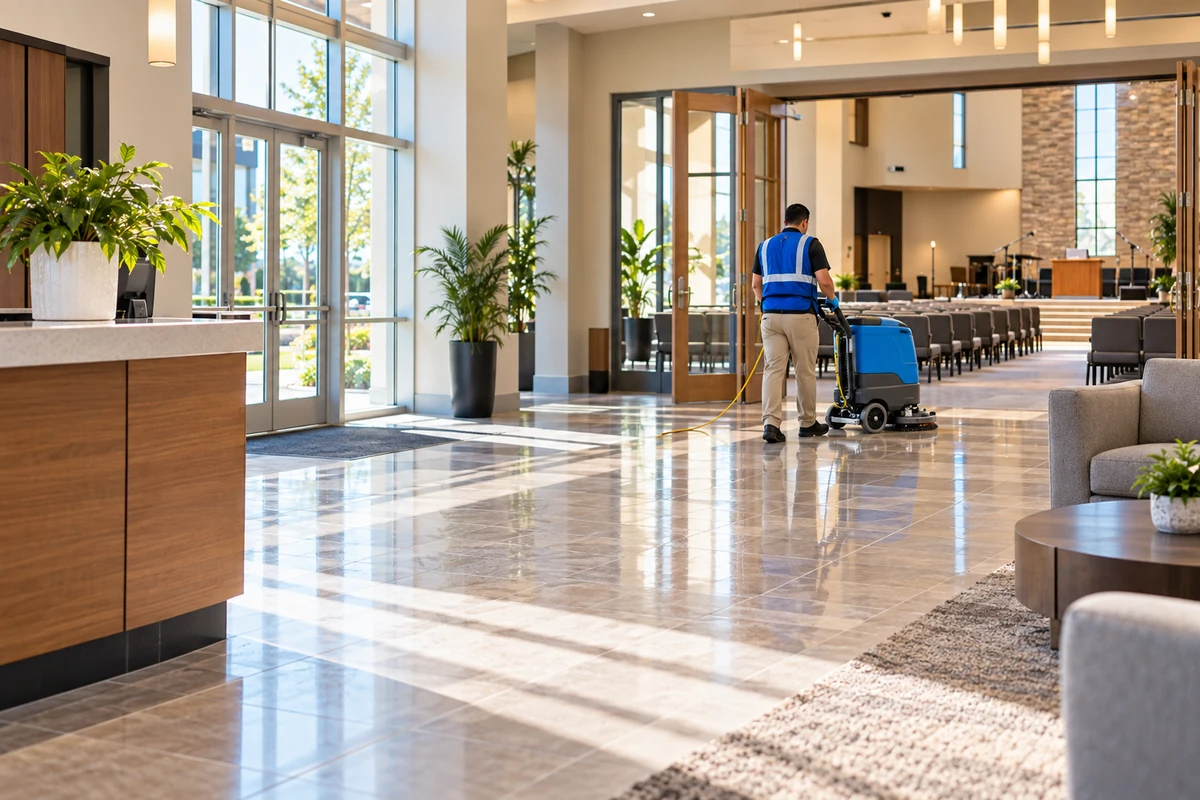
Churches have a lot going on during the week, not just on Sunday. There are prayer and worship services throughout the week. They may also host potlucks, youth group meetings, and many other activities. Each event brings a different level of activity and use to the space, and creates a different kind of mess. Cleaning an entire church as one big task can mean overlooking some surfaces and other areas. It takes more time, and it’s not effective.
Spaces in a church building require different types of cleaning. That is why a church cleaning checklist is so useful. Austin’s dry summer and fall winds can bring dirt, limestone dust, cedar debris, and pollen into church buildings. Much of this debris collects around doors and other high-traffic areas.
Church facilities face many challenges, and this guide breaks them down, room by room. It gives church facility teams practical steps for keeping each area clean and well-maintained. Whether you handle the work yourself or hire professional cleaning services, this checklist will help you cover every space.
Sanctuary and Worship Areas
Sanctuary cleaning requires a careful balance. Delicate fabrics and furnishings need special attention, while floors and other high-use areas need regular cleaning to remove dirt tracked in by parishioners. The goal is to protect the space while keeping it clean and ready for the next service.
Start with the carpets and runners, including the areas under the pews. Vacuum them thoroughly to remove dirt and debris. Sweep and damp mop wood and tile aisles. Use a microfiber cloth to dust pews, individual chairs, window sills, the pulpit, and lectern.
Sound consoles, light controls, and microphone stands also need regular dusting. Give the same attention to door hardware and railings. Empty bulletin holders, communion trays, and trash receptacles as needed. Clean spills on upholstered fabrics as soon as possible to prevent stains.
Regular sanctuary cleaning helps prevent long-term stains and keeps the worship space looking clean and well maintained.
Fellowship Halls and Gathering Spaces
The fellowship hall is extremely busy, with lots of different events. From wedding receptions and Bible studies to potlucks, fellowship halls can stay busy throughout the week. That is why your cleaning routine should be flexible and match how often the space is used. Wipe down tables and chairs after each use.
Sweep and mop the floors to remove food, dirt, and spills. Remove trash promptly to prevent odors. Clean door hardware, light switches, and supply carts as part of the routine.
Church Classrooms and Meeting Rooms
Not all classrooms are used equally. Toddler Sunday school rooms get much messier than adult study rooms. Classroom cleaning keeps learning spaces clean and ready for the next class. Gently sanitize desks and worktables, then vacuum area rugs and clean floor tiles.
Next, empty pencil sharpeners and wastebaskets. Check doors, light switches, and lower walls for crayon marks. Finally, stack books and organize study rooms so everything is ready for the next class.
Nurseries and Children’s Areas
It is important to keep nursery toys and play areas clean. During church nursery cleaning, focus on regular sanitation. You should use cleaning products according to the manufacturer’s instructions. Wash plastic toys as recommended. Place toys that need cleaning in a separate bin until they can be washed.
After each service, sanitize diaper-changing tables and pads. Wipe down
- Small tables and chairs
- Vacuum rugs and play mats
- Mop hard floors
- Clean diaper pails
Consistent nursery care gives parents greater peace of mind.
Church Restrooms
Church restrooms are an important part of your church’s hospitality. Messy restrooms can deter first-time guests. Disinfect all surfaces, especially porcelain and counters. Sweep and mop tile floors. Clean door handles, stall locks, and levers.
Before each service, restock the paper towel, toilet paper, and soap dispensers. Check restrooms between back-to-back services on peak days.
Church Kitchen and Food Preparation Areas
Clean church kitchens to keep members and guests safe. Regular cleaning also helps maintain basic food safety standards. Prep and food service areas should be cleaned thoroughly on a consistent schedule. This includes:
- Clean and sanitize stainless steel prep areas
- Wipe down food service counters
- Clean and sanitize tables and prep sinks
- Clean and sanitize cabinets and shelving
- Mop floors and clean out floor drains
- Use a food-safe sanitizer on any surface that comes into contact with food
For deep cleaning, remove food waste bins promptly to prevent food scraps from sitting overnight.
Offices and Administrative Areas
Personnel and financial records kept in church administrative offices are private. When cleaning church offices, trust and clear communication among office staff are essential. Dust Surfaces and vacuum walkways. Empty wastebaskets and shredders.
Use approved cleaning materials and methods for cleaning touchscreens of church copiers and fax machines. Cleaning staff should be informed which office areas, cabinets, and furniture they are allowed to clean. They should leave any restricted items or areas untouched.
Entrances, Lobbies, and High-Traffic Areas
A good first impression is essential in welcoming visitors to your church. In Austin, the wind blows dust and dirt onto your front steps.
Entryway doors collect fingerprints and grime, , and the mats get soiled from heavy foot traffic. Tables, lobby chairs, handrails, and door pulls are touched by almost every visitor and need regular cleaning. Dirt tracked in from outside can damage waxed floors.
Floors, Carpets, and Common Areas
Proper floor care saves money over time by extending the floor’s useful life. Using neutral cleaners when damp-mopping helps preserve waxed finishes, while regular vacuuming keeps dirt and debris from building up in main aisles and hallways. Clean spills and spots promptly to prevent staining and damage to the floor finish.
Schedule deep cleaning during slower periods to restore the appearance of floors, carpets, and upholstery. Regular church carpet cleaning and scheduled floor cleaning can help extend the life of your floors and reduce the effects of heavy foot traffic.
How Often Should Different Church Areas Be Cleaned?
There is no single schedule for every church. It depends on traffic, room use, and facility size. Here is a general schedule you can use to customize for your own church:
- Sanctuary: After each service, with deeper cleaning weekly
- Restrooms: Daily, with additional cleaning during periods of heavy use
- Nursery: After each use, with routine sanitation
- Fellowship Hall: After each gathering
- Classrooms: Weekly, more often if used frequently
- Kitchen: After each use, with deeper cleaning periodically
- Lobby/Entrances: Daily, with frequent checks during peak times
- Offices: Several times a week, depending on staff presence
Creating a Room-by-Room Cleaning Plan for an Austin Church
Creating a church maintenance plan starts by listing every room and space in your church to identify high-traffic areas, like entrances ,restrooms, and the sanctuary.
After you have identified potential trouble areas, think about the tasks associated with cleaning each space. Create a list of routine tasks, such as picking up trash and wiping surfaces each day. Then, add periodic tasks, such as professional carpet and floor cleaning.
Your plan should also account for special events and high-traffic areas that need extra attention. A church that uses its facilities throughout the week will have different cleaning needs than one that sees most of its activity on Sundays.
While creating the plan, decide who will handle each task. It could be your staff, volunteers, or a professional church cleaning service.
When Should an Austin Church Consider Professional Cleaning?
Some churches can manage the cleaning with their own staff and volunteers. Frequent services, meetings, and events can make it difficult to keep up with routine cleaning.
A large church with multiple buildings has more ground to cover, especially with frequent services and events on the calendar. If staff and volunteers are limited, keeping up with the cleaning can become overwhelming.
Some jobs also need specialized care, such as floor and carpet cleaning. Most staff and volunteers don’t have the time, experience, or appropriate equipment for a job well done.
There’s no single right answer here; each church has different cleaning needs. Consider the facility size, workload, usage, and available staff or volunteers. The goal is finding a cleaning routine that can be maintained consistently.
Keep Your Church Clean, Safe, and Ready for Every Service with NAE Cleaning Solutions
A church cleaning checklist makes it easier to maintain a clean, welcoming place of worship while protecting furnishings, improving hygiene, and helping members and visitors feel comfortable, service after service.
NAE Cleaning Solutions provides church cleaning services across Austin, TX. Our team handles all the different spaces within your facility, including:
- Sanctuaries
- Fellowship halls
- Classrooms
- Nurseries
- Children’s areas
- Restrooms
- Offices
- Entrances
- Common areas
We focus on consistent, scheduled cleaning rather than one-time service, helping reduce the workload for your staff and volunteers. Our cleaning schedules are built around your worship services, weekly programs, meetings, and special events.
Frequently Asked Questions
What areas of a church need to be cleaned most frequently?
It depends on the traffic and use. However, the areas that need daily attention include:
- Restrooms
- Entrances
- Nurseries
- Fellowship areas
How often should a church be professionally cleaned?
The right frequency depends on
- The Size of your facility
- The number of weekly services and activities
- How often you host special events
How should a church nursery be cleaned?
Start with the floors. Then clean the changing surfaces, tables, and chairs. Don’t skip high-touch spots like door handles. Toys need regular cleaning too. Follow the manufacturer’s instructions when cleaning each toy to avoid damaging the material.
What should a church cleaning checklist include?
A good church cleaning checklist includes:
- Sanctuary
- Fellowship hall
- Classrooms
- Nursery
- Restrooms
- Kitchen
- Offices
- Entrances
- Floors
- High-touch surfaces.
Add periodic deep-cleaning tasks for carpets and hard floors too.
How can Austin churches create an effective cleaning schedule?
Start by mapping out every room. Then look at traffic and program schedules. Assign routine and periodic tasks. Plan for events. Review the schedule as facility use changes.
