
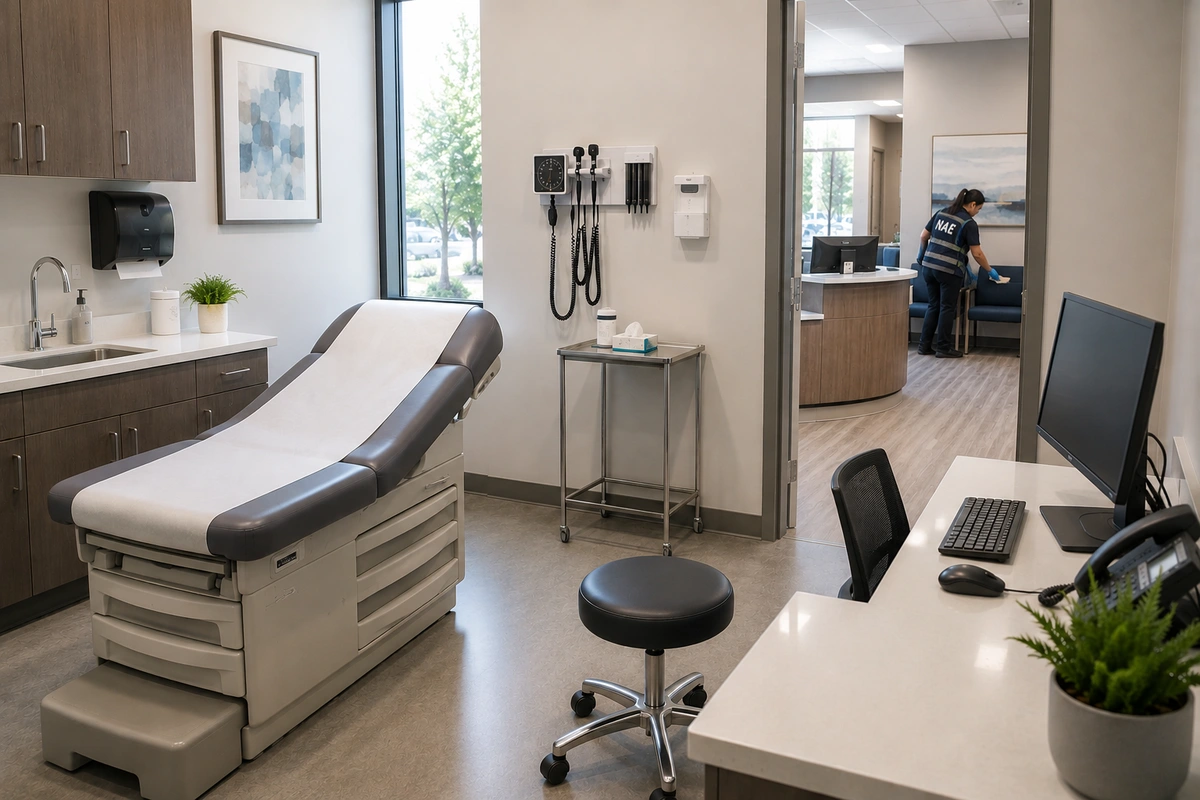
In Austin, TX, a medical office presents particular sanitation challenges compared to a standard commercial workspace. Patients, medical staff, visitors, and diagnostic devices interact continuously across shared rooms throughout the working day. A complete cleaning checklist must address several critical operational areas:
- High-touch architectural and contact surfaces
- Common corridors, waiting rooms, and flooring
- Administrative stations and staff-only zones
- Patient-care and consultation rooms
- Restrooms and sanitary facilities
- Routine waste management
- Periodic deep-cleaning
- Systematic quality-control reviews
In this article, we will cover a complete checklist for Austin medical offices so your office stays clean and ready for your patients.
Why Medical Offices Need a Specialized Cleaning Checklist
Medical offices follow stricter cleaning rules than a regular workplace. OSHA requires medical facility cleaning services to follow the OSHA Bloodborne Pathogens Standard. It covers the safe handling of blood and other body fluids. The CDC also provides cleaning guidelines. These guidelines cover surfaces and medical equipment.
None of this fits a normal office cleaning routine. Patients turn over quickly, and each one touches the same door handles, chairs, and counters as the last. Equipment gets shared from one patient to the next. Some patients are more vulnerable to illness, and some visits carry a real risk of bodily fluid exposure. Add a fast-filling waiting room and exam rooms that turn over just as fast, and cross-contamination risk climbs too.
Cleaning and disinfecting split into two jobs. Cleaning removes dirt and impurities, while disinfecting kills germs. The CDC recommends cleaning first, then disinfecting.
What Can Happen When Important Areas Are Missed?
When a checklist has gaps, the effects show up fast. Frequently touched surfaces stay contaminated longer than they should. Patients notice unpleasant odors and visible dirt, which can affect their impression of the medical office. Cross-contamination risk goes up. Infection-control practices become inconsistent from room to room, even if everyone means well.
Daily Medical Office Cleaning Checklist
Daily cleaning should focus first on areas that patients and staff touch often. Patient-care areas need close attention. High-touch points should also align with how people move through the facility. Below is the complete checklist of daily medical facility cleaning in Austin:
Reception and Waiting Area
- Disinfect reception counters.
- Clean door handles and push plates.
- Disinfect chairs and armrests.
- Clean check-in tablets and kiosks.
- Sanitize shared pens and clipboards.
- Empty waste bins.
- Vacuum carpets.
- Sweep and mop hard floors.
- Remove visible fingerprints from glass.
- Check hand-sanitizer stations.
NAE can identify high-touch points based on actual patient flow. Not every surface needs the same level of attention. The layout can show which areas receive repeated contact.
Exam and Treatment Rooms
Exam and treatment rooms require close attention because patients and clinical staff use these spaces during care.
- Clean and disinfect exam tables.
- Disinfect patient chairs.
- Clean countertops.
- Clean sinks and faucets.
- Disinfect cabinet handles.
- Clean light switches.
- Clean door handles.
- Replace disposable barriers or paper where needed.
- Clean approved medical-equipment surfaces.
- Remove waste.
- Clean floors.
- Check for visible spills.
Medical equipment should not receive the same cleaning chemical by default. Follow the equipment manufacturer’s instructions before applying a cleaner or disinfectant.
Restrooms
- Clean and disinfect toilets.
- Clean sinks and faucets.
- Clean mirrors.
- Disinfect dispensers.
- Clean door handles.
- Mop floors.
- Empty waste bins.
- Refill soap.
- Refill toilet paper.
- Refill paper towels.
Hallways and Common Areas
- Clean handrails.
- Disinfect door handles.
- Clean light switches.
- Sweep and mop floors.
- Clean corners.
- Remove visible dust.
- Clean high-touch controls.
- Clean glass.
CDC guidance recommends routine cleaning of high-touch surfaces and floors in outpatient areas.
Staff Break Rooms and Administrative Areas
Patients may not enter these rooms, but they still form part of the office cleaning program.
- Clean desks.
- Disinfect shared keyboards.
- Clean phones.
- Wipe tables and chairs.
- Clean appliance handles.
- Clean countertops.
- Clean sinks.
- Empty waste bins.
- Clean floors.
Administrative areas support clinic operations and should remain part of the daily hygiene plan to reduce the spread of contaminants into clinical areas.
Between-Patient Cleaning: What Should Be Disinfected?
Between-patient cleaning is different from nightly janitorial service. The focus should be on surfaces that a patient or clinical staff member touched during care.
A basic turnover checklist may include:
- Exam table
- Patient chair
- Frequently touched equipment surfaces
- Countertops
- Cabinet handles
- Light controls
- Door handles
- Other surfaces contaminated during the patient encounter
The correct disinfectant depends on the surface and the product’s approved use. EPA guidance states that users should follow the product label, including the required contact time.
NAE should not assume that one disinfectant works for every piece of medical equipment. Equipment instructions and the facility’s infection-control procedures should guide the cleaning method.
Weekly Medical Office Cleaning Checklist
Weekly cleaning reaches areas that may not need attention during every patient turnover. These surfaces can still collect dust, soil, and residue over time.
Below is the weekly medical office cleaning checklist:
Surfaces and Fixtures
- Clean baseboards.
- Clean windowsills.
- Wipe door frames.
- Clean wall contact points.
- Dust light fixtures.
- Clean accessible vents and registers.
- Clean behind and under movable furniture.
Equipment and Storage Areas
- Clean exterior medical-equipment surfaces when approved.
- Wipe carts.
- Clean shelving.
- Wipe storage cabinets.
- Clean supply areas.
- Clean diagnostic equipment surfaces when allowed by the manufacturer.
Floors and Upholstery
- Deep vacuum carpets.
- Treat carpet spots.
- Clean floor edges.
- Vacuum upholstery.
- Complete scheduled floor-care tasks.
In NAE Cleaning Solutions’ operational workflow, weekly tasks are adjusted to suit floor compositions, foot traffic, and clinic operating hours.
Monthly and Periodic Deep Cleaning Checklist
Monthly tasks shouldn’t be treated as a fixed rule that applies to every office the same way. The right frequency depends on the facility itself. These tasks cover deeper, long-term maintenance that daily and weekly cleaning don’t reach.
A typical monthly or periodic checklist includes:
- HVAC & Air Quality
- Replace or clean air filters
- Wipe down vents and grilles
- Maintain air purifiers and humidifiers
- Deep Floor and Wall Cleaning
- Shampoo carpets and rugs
- Strip, wax, or scrub hard floors
- Clean walls, ceilings, and light fixtures
- Windows and Entryways
- Wash interior and exterior windows
- Clean entry signs, door handles, and handrails
- Sweep and wash sidewalks
- Infection Control Check
- Review disinfectants for EPA approval and correct use
- Inspect PPE storage and stock
- Update safety signage and compliance posters
- Waste Disposal Review
- Audit medical waste sorting and removal
- Clean and disinfect outdoor waste bins
High-Touch Surfaces Medical Offices Should Never Overlook
High-touch surfaces can vary by room and facility. CDC guidance recommends identifying these points based on patient flow and the needs of each patient-care area.
High-touch surfaces include:
- Door handles
- Push plates
- Light switches
- Reception counters
- Pens
- Clipboards
- Tablets
- Keyboards
- Phones
- Chair armrests
- Exam tables
- Faucet handles
- Toilet flush handles
- Handrails
- Shared equipment controls
The cleaning frequency should match patient traffic and the facility’s infection-control procedures. A facility assessment can help identify surfaces that receive repeated contact.
Medical Office Cleaning Products and Equipment
Professional medical office cleaning requires the right products and tools for each task. Product compatibility matters as much as the product itself. EPA states that disinfectants should be used according to their registered uses and label directions. The goal is not to use the strongest chemical on every surface. It requires:
- EPA-registered disinfectants where appropriate
- Microfiber cleaning systems
- Suitable personal protective equipment (PPE)
- Dedicated cleaning equipment
- Floor-care equipment
- Vacuuming equipment
- Waste-handling supplies
NAE Cleaning Solutions selects cleaning products based on the surface, equipment instructions, and facility requirements. This helps prevent the same chemical from being used across surfaces that need different care.
HIPAA Awareness and Medical Office Cleaning
Medical offices contain information that should not be exposed during routine cleaning. A cleaner may work near patient charts, printed schedules, computer screens, paperwork, and staff workstations.
Cleaning teams should understand the need for privacy while working in these areas. They should avoid reading or handling paperwork that does not need to be moved. Computer screens should not be accessed. Restricted areas should remain restricted.
Keys and access procedures also matter. If a cleaner finds exposed patient information, the facility should have a process for reporting it to the appropriate person.
How NAE Cleaning Solutions Approaches Medical Office Cleaning in Austin
A practical cleaning program requires reliable execution and systematic management. NAE Cleaning Solutions manages medical office cleaning services in Austin through a four-step framework:
1. Assess the Facility
NAE starts by reviewing the layout, patient flow, room types, traffic levels, surfaces, and any existing cleaning requirements.
2. Build a Customized Checklist
From there, the checklist is adjusted based on facility type, operating hours, patient volume, cleaning frequency, priority areas, and floor or surface types.
3. Execute the Cleaning Program
NAE schedules cleaning around the client’s own operations, including service during working hours or after hours, depending on what fits the office best.
4. Inspect and Improve
A checklist is only useful if someone verifies that it was completed. NAE conducts structured quality-control inspections to review technician performance and audit high-touch disinfection.
When Should an Austin Medical Office Hire Professional Cleaners?
Handling cleaning entirely in-house often strains clinical staff and risks inconsistent sanitation. Consider hiring professional cleaning services when facing:
- High patient volume
- Multiple exam rooms
- Extended operating hours
- Frequent patient turnover
- Limited internal staff
- Specialized flooring
- Multiple treatment areas
- A need for documented cleaning routines
- A need for consistent service
A professional cleaning team can also help when staff don’t have the time, training, or equipment to maintain the full cleaning schedule.
Medical Office Cleaning Checklist: Quick Reference
A checklist works best when it’s easy to scan at a glance. Use this table as a quick reference for what needs attention and how often.
Here’s how the tasks break down by frequency:
| Cleaning Frequency | Operational Priorities |
| Between Patients | Exam table, patient chairs, high-touch tools, counters, and door handles. |
| Daily | Waiting room, check-in desks, restrooms, floors, daily trash, and key touchpoints. |
| Weekly | Baseboards, door frames, air vents, equipment exteriors, and deep vacuuming. |
| Monthly / Periodic | Machine floor scrubbing, carpet extraction, high dusting, and upholstery cleaning. |
Note: The exact schedule should match the facility’s patient volume, layout, services, surfaces, and infection-control requirements.
Frequently Asked Questions
How often should a medical office be cleaned?
There is no single schedule for every medical office. Cleaning frequency depends on
- Patient volume
- Facility type
- Areas being cleaned
- Traffic patterns
- The facility’s infection-control program.
What surfaces should be disinfected most often in a medical office?
Focus on high-touch and patient-contact surfaces. These can include
- Door handles
- Light switches
- Exam tables
- Chair armrests
- Faucet handles
- Counters
- Shared equipment controls
- Other surfaces that receive repeated contact.
What is the difference between cleaning and disinfecting a medical office?
Cleaning removes dirt and impurities from surfaces. Disinfection uses an appropriate product to kill germs on surfaces.
CDC guidance supports cleaning before disinfection when both steps are needed.
Does every medical office need the same cleaning checklist?
Not necessarily. Every medical office has different cleaning requirements. A pediatric clinic, a dental office, and a physical therapy clinic each have different cleaning priorities.
What should I look for in a medical office cleaning company in Austin?
Look for the following things:
- Healthcare-specific cleaner training
- Knowledge of EPA-registered disinfectants
- Customized task checklists
- Transparent quality-control inspections
- Experience working in outpatient healthcare facilities.
